


Xavi Moro is a promising midfielder from La Masia who performed exceptionally well through all levels of Barcelona's youth system, up to Barcelona B. After that, he played for clubs such as Cordoba, Sabadell, Castellon, Badajoz, Hercules, and Sant Andreu.
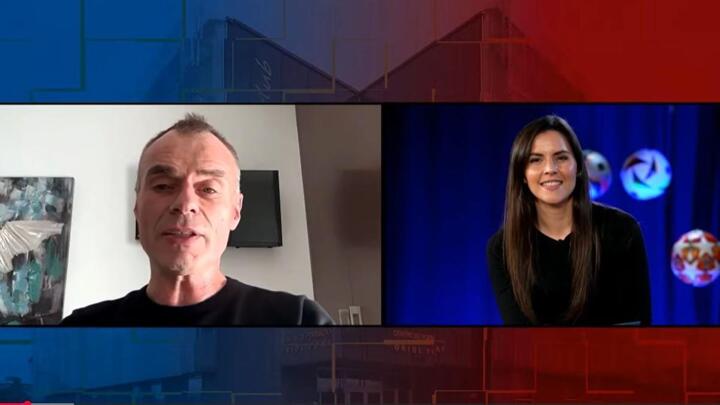
After retiring, he coached in the youth academies of several Catalan clubs and also ventured into Thai football. Now 51, he has decided to return home, hoping to find a project that excites him. In the "Sports DNA La Masia" program, we spoke with Xavi Moro, a football personality who still carries the imprint of Barcelona's youth academy.
Tell us about your experience joining Barcelona.
We used to spend summers in Leon, Bilbao, or Castelldefels. That was a summer we hadn't planned to stay there. I was playing on the beach and running around the market and streets of Castelldefels when Abellino, the chef at La Masia at the time, heard about me.
Then they asked me to try out for Barcelona. It was July, and the cadet and children's teams were on vacation. The only youth team that had started training was the youth team, which included Pep Guardiola and Sergi Barjuan, among others. I remember going to training one day, and later Oriol Tort and Johan Cruyff decided to keep me at La Masia.
Do you remember that training session?
Seeing Guardiola, Sergi... they were very young then, not yet the figures they would become, but I was even younger, and to see Johan Cruyff standing there watching you train, it was overwhelming... I had no idea I was there for a tryout, I knew nothing.
I only knew I was going to play with other teammates, but I never expected something like that to happen. They were all five years older than me then. I just went to play, to have fun, to do what I usually did every day, completely unaware that that training session would become a turning point.
A football legend gave the nod for your signing.
When I was a kid, I collected Johan Cruyff, Charly Rexach, and their generation on trading cards because I would buy them every time they came to Spain, Catalonia, or the Basque Country. I was well aware of the significance of these players in football history. I remember them introducing me to Oriol Tort, and then I went to play and have fun, with no other goal.
At the time, I didn't realize that such important figures in football were considering whether I could sign for Barcelona. Years later, of course, you reflect on these things because you have more understanding, but not then. I was just a boy living in Paris with a country kid's mentality.
How did it feel taking that step?
It was very difficult for my parents because they never thought something like that would happen. I remember the club's vice president, Joan Gaspart, personally knocking on my parents' door, and my parents were completely bewildered. In the end, it was my own decision at such a young age to stay in Barcelona. I had only been to one league match before, Barcelona against Racing Santander, I remember it was probably the 1986-87 season, but I hadn't really explored the club's facilities.
What are your memories of your first few years at La Masia?
I was one of the longest-serving residents of La Masia. When I first arrived, it was when Guillermo Amor, Angoy, and Milla were moving into the apartments Barcelona had arranged for them. I later had the chance to spend time with these players because they would come back to eat with us at noon.
Then, from Guardiola's generation onwards, to Valdes, Puyol, Iniesta, and also Valdes. Valdes lived in Tenerife, and although his parents were from L'Hospitalet, he only stayed for a month in his first year because he cried every day during that month. I remember comforting him, and then he came back the second year. Others I stayed with included Milla, Rola, Sergi Altimira, Puyol, Iniesta, Mario Rosas, and many more.
Do you think leaving your family environment at 13 and moving into La Masia was the right decision?
It was fate. Looking back now, deciding to stay at La Masia with almost no understanding of anything back then was indeed a bit naive and fearless. But I will always be grateful to Barcelona, to all the coaches, and to every teammate I met, because for me, it was a very beautiful time. It not only helped me grow into a professional player—I later played for 18 seasons—but also made me cherish human relationships and our team spirit even more.
I also valued being able to continue studying in French secondary school and even going to university later. That decision carried a kind of naive fearlessness, and perhaps what convinced my parents a little was that we had relatives in Catalonia. They would visit me every week. Thanks to my uncle, aunt, and family, I didn't feel the separation as strongly. I remember not crying once in the first year; it was probably that naive fearlessness that kept me going.
In the second season, when my parents came to visit, I cried for the first time. It was when they left, and I truly realized that I was actually alone, and in a way, I had also left my parents. So I told myself that at least all of this had to be worth it. Now, after so many years, I truly feel it was very much worth it.
Do you have any regrets?
Indeed, I only played one match for the first team, but the feeling that the coaches and teammates conveyed to me still remains. I am still a Barcelona person, I have great affection for Barcelona, and I cherish that time as a very fond memory. That experience helped shape my personality, and the values they passed on to me, I can now pass on to my daughters.
If I had a son and the same thing happened, I would try to be there for him because I think it's very important at that age. Even if it's not every day, you need to be there for them. In fact, Barcelona does this now when signing such young players: they try to have parents and family accompany them.
You played in midfield. Why do La Masia midfielders always become excellent coaches like Guardiola, Arteta, Fabregas, or Xavi?
Tell me what your midfield is like, and I can tell you how the team will play. This position is very special. When I first arrived at La Masia, the team played in a 3-4-3 formation, so I was a number 4; later, when it changed to 4-3-3, I became a number 6. The midfield is the heart of the team, the engine.
You always have to find a balance between the players further forward and further back. In recent years, we've seen many midfielders coach very successfully at the top level. It has always been said that midfielders understand the game best. The midfield is part of the team, and it's always connected to the attack. You are in the center, the heart, and I think that's why. We see Fabregas, we see Arteta, these people who came out of La Masia are doing very well, now on the top stage, and all from that position.
Do you think you had the ability to play for Barcelona's first team?
To succeed at Barcelona, in addition to ability and talent, I think the most important things are the effort you put in every day and humility. Because you can get into the first team, but to truly establish yourself, you need that discipline and humility to prove yourself in every training session. Then you also need to catch the right moment. I remember the example of Sergi Barjuan.
He made his debut at Galatasaray because there was a special situation: Johan Cruyff's left-back was injured, and the player who could play that position was also injured. So he called La Masia and asked Quique Costas to bring Gonzalo Garcia, who played right-back, to play on the left at Galatasaray. But that day, Gonzalo Garcia had very bad luck; he went up the stairs at Mini Estadi, took a shot without warming up, and tore his cruciate ligament.
So Quique Costas told him, "Okay, then bring Sergi." From then on, he went to Turkey, played a brilliant game, Barcelona won, and he stayed. That was a very bad situation for Gonzalo Garcia, but very good for Sergi. I think life is like that, always with two sides. It's about effort, discipline, proving yourself every day, and also about stepping up when others need you. Because many times, you might train with the first team for six months, a year, and you can see you're doing well, but the opportunity doesn't come, and you might get discouraged; but the opportunity will always come at some point, and then you must be ready.
In recent years, which La Masia players have surprised you the most?
La Masia always impresses: countless excellent players have come out of here. Who surprised me the most? Yamal. He's the best in the world, or second, it doesn't matter—he's just a prodigy. I watched him for a season and a half, between when I returned from Thailand and left again. At that time, he was still a children's team player but was already playing with the cadet team. He was already very remarkable then. In the era of Xavi, Iniesta, and Puyol, we had Mario Rosas in our team.
He was excellent. Xavi and Iniesta were great, but Mario... he didn't make it, while others did. The last one I remember is Xavi Espart. I don't know him; I've been away for a long time. His understanding of the game is outstanding: he can play on both wings and also push forward like a fourth or fifth midfielder. He's solid defensively, can participate in attack, score goals, and create space for teammates.
I'm proud to see the club still adhering to this development philosophy. I also haven't forgotten Gerard Martín, whom I coached. Many people have forgotten him. I remember him, his brother Arnau—I coached them for two seasons—and their family. He is underestimated. In football, people always talk about goals or assists and less about defenders. Like Cubarsi. I would give him the Ballon d'Or. I've never seen a player like him, perhaps only Daniel Maldini, but in my opinion, Cubarsi is much stronger. Whether he will win more titles in the future is another matter.
What do you want to emphasize most about Gerard Martín?
I want to specifically mention Gerard Martín because he is an example of a comeback. I remember coaching him at the Pavfmans club, which is Chiqui Casals' football school. I was coaching both brothers at the same time, and they both performed very well. One week, after communicating with Barcelona, he went for a tryout for a week, Barcelona didn't keep him, he was about 11 then, and he returned to our Pavfmans school.
That month, he was a bit stunned and not very focused. I talked to him and told him, "Listen, you will always have such opportunities in the future, the key is yourself. You have the ability, what you need to do is go back to being yourself, enjoy your teammates, enjoy football, and as long as you keep working hard, this opportunity will come again." Later, he really did get another chance, and then he joined Cornellà. For me, he is a role model who constantly wants to improve; as a person, he is also very humble and has the ability to keep working hard every day.
Barcelona started the season irresistibly, but losses to Paris Saint-Germain and Real Madrid cooled that momentum.
For them, it was a huge learning experience. In sports, you always lose more than you win, but I think these La Masia players gained a lot. They lost games due to unfavorable results, but they gained a lot in terms of experience and learning. Listening to them speak, they say we must analyze what we did poorly to improve.
For me personally, this is very telling. I think Barcelona, with these players, has a long future ahead to deal with strong teams. Because indeed, there was a lot of rotation in the Paris Saint-Germain match, and the match against Real Madrid, after all, is El Clásico, and it must be given due importance. There will always be some situations different from the start of the season; at the beginning of the season, Barcelona played like an airplane, but against Real Madrid, it was more of a head-on confrontation.
You worked in Thailand and are now back home. What kind of project are you hoping to take on next? Is your dream to return to Barcelona someday, coach in the youth academy, or coach a professional team?
I started my coaching career after an 18-year professional career. Initially, I gained a lot of experience in youth systems before starting to coach adult teams. I spent three years in Thailand and now a season and a half in Johor, Malaysia. In my first year in Thailand, I worked as part of the coaching staff, and in the next two years, I was the head coach; in Malaysia, I was also part of the coaching staff.
I've been away for a long time, and now I want to find a project, if possible, closer to home, because too much time has passed, and what I want to do now is coach. If Barcelona reaches out to me to help in the youth academy or the first-team coaching staff, I would be very happy and, of course, willing. After that, I will evaluate any project that comes my way, but as I said, I would be very happy to work here.
Which coaches have influenced your career the most?
First, I would mention the coaches I met during my time at Barcelona, because several had a great impact on me, such as Martínez Vilaseca, with whom I coached for many years, and later Asensi, Mora, Costas... I don't want to miss anyone. These were the people from the very beginning, my childhood and adolescence.
I still remember Toño de la Cruz and don't want to miss him either. They had a great influence on me, and I still remember their advice, teachings, and many details. Afterwards, among all the coaches I worked with, I always tried to learn, and perhaps the one who influenced me the most was Emery. At first, we were opponents, playing against each other in the Segunda Division, then teammates, and then he became our head coach in the middle of the season.
I learned a lot from him, and I value this coach very much. We shared many ideas, he helped me a lot, and I helped him a lot. He is a benchmark for me, and this week he will be at Camp Nou.