


The changing seasons signal that another year is drawing to a close. In the Premier League, the falling autumn leaves also herald the inevitable managerial changes. This time of year is widely regarded as a peak period for managerial turnover, as clubs run out of patience with their head coaches and look for a fresh start. It is the season for sackings, but this year is somewhat unusual.

Since the 2016-17 season, there have been 77 mid-season managerial changes in the Premier League, 32 of them in the last ten weeks of the calendar year.
In late October, boards often start to get restless, and by November and December they frequently decide to roll the dice. This happens every year without exception.
This season is unlikely to be any different. Several Premier League clubs have gradually lost the optimism and expectations they had at the start of August, and they have little choice but to at least consider changing their manager.
Manchester United is one such club. It once kept the same manager for 27 years and is now contemplating whether it is time for another change.
November and December are the panic points. This period is not as singularly focused as the NFL's "Black Monday" (the first Monday after the regular season ends), but roughly a third of the way into the season, it is enough for owners, executives and fans to judge a manager's success or failure on results.
No two sackings are exactly alike, but at this stage of the season timing is the common thread. Early-season losses are usually more forgivable, especially when the transfer window is still open or has just closed. As winter approaches, though, a team that remains mired in a slump often forces its club into a decision.
In the past decade, twelve managers were sacked in November and thirteen in December. January also saw twelve dismissals, four of them in the first week of the new year, including Amorim last season.
February, March and April combined average only about two sackings per season. The figure for November, December and January is almost double that.
Over the last ten years, as the days have grown shorter, many well-known managers have departed during this period.
Manchester United sacked Erik ten Hag on October 28, 2024, only four months after triggering his contract extension following the FA Cup win.
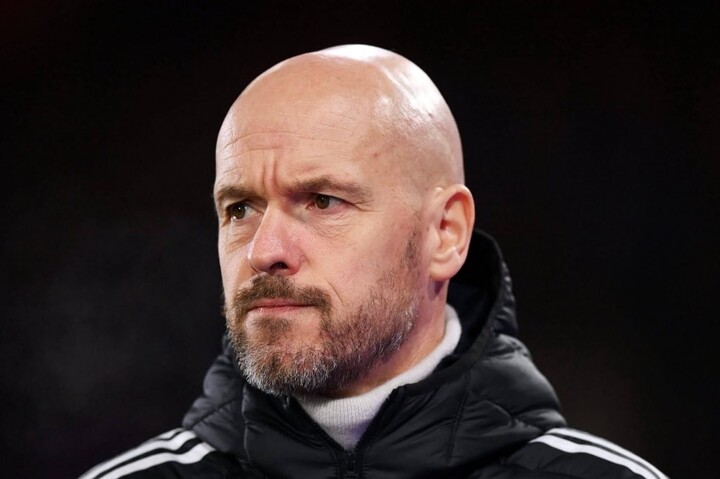
Solskjaer was dismissed by Manchester United in November 2021, and in the same month Tottenham Hotspur admitted that appointing Nuno Espírito Santo that summer had been a mistake.
Mauricio Pochettino's highly successful tenure at Tottenham also ended abruptly in November 2019. Ten days later, Arsenal ended Unai Emery's poor spell at the Emirates Stadium.
Past achievements offer no guarantee either. When a club is at risk of missing its targets, a manager is not assured of seeing out the season. Roberto Di Matteo was sacked by Chelsea in mid-November 2012, only six months after winning the Champions League and FA Cup double.
The Championship is no different. Just last November, Southampton, Norwich City and Swansea City changed managers within eleven days. Southampton are particularly familiar with this timing, having sacked four managers in November or December over the past nine seasons.
Nuno Espírito Santo, sacked by West Ham United last season, was not the first manager to lose his job at this time of year, and he will not be the last.
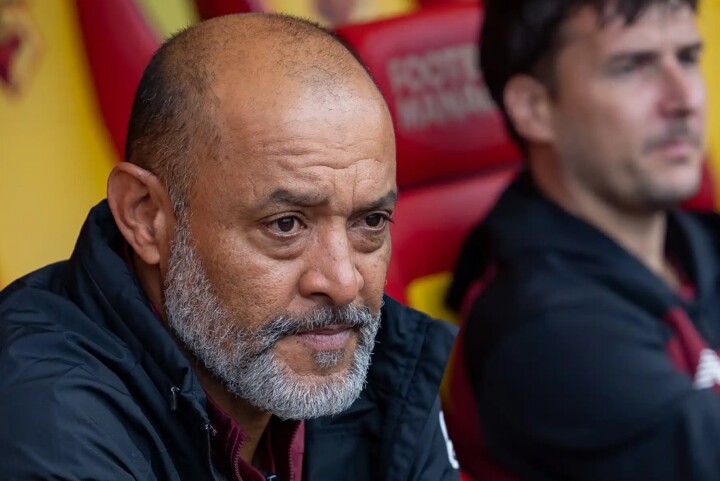
This year is unusual: so far in November, no Premier League manager has been dismissed. By this point last season, four had been sacked. Nottingham Forest accounted for two, first dismissing Nuno in September and then his successor Ange Postecoglou six weeks later. Graham Potter and Vítor Pereira also lost their jobs at West Ham United and Wolves, respectively, after dismal starts to the season.
This time, clubs have shown more patience, perhaps because eleven of the twenty Premier League managers were appointed only this summer. Most of the remaining nine won titles, earned promotion or qualified for European competition last season.
However, the last weekend before this international break is likely to be significant.
Unsurprisingly, the scrutiny is greatest on the bottom four teams in the Premier League table.
Carrick is under more pressure than anyone, with Manchester United winless in seven consecutive Premier League matches. A 3-2 comeback victory over Roma in the Champions League on Tuesday temporarily eased some of the criticism. But with Aston Villa visiting Old Trafford on Sunday, the team cannot afford another loss, and the consequences of ending the weekend in the relegation zone would be hard to imagine.
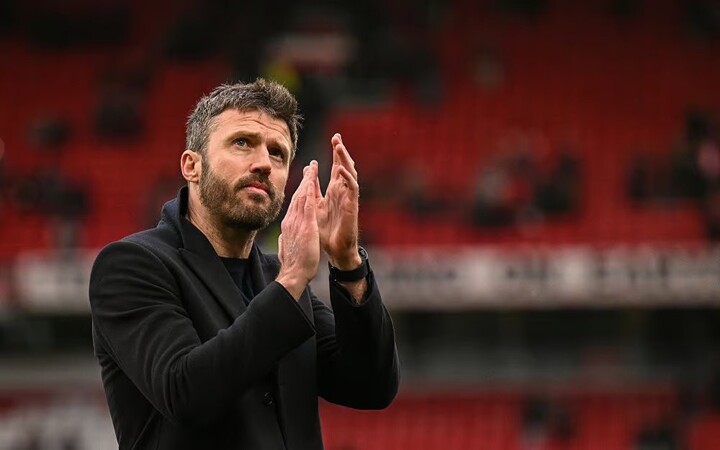
Everyone knows what it feels like to be at the bottom. Potter and Pereira were sacked last autumn after their teams fell into the relegation zone. The atmosphere there is oppressive, and the pressure builds constantly.
Pierre Sage knows this well. He was appointed Crystal Palace manager this summer and has managed only two wins and seven points in nine Premier League games. Crystal Palace have the worst defense in the league, and three consecutive losses have already sparked discussion about his future.
His predecessor at Selhurst Park, Oliver Glasner, has also run into trouble since moving to Nottingham Forest. Since beating Aston Villa away in mid-September, the team has picked up only one point from a possible fifteen. Forest owner Evangelos Marinakis is known for acting quickly on managers, having replaced four in the past fifteen months, so the team must show improvement in Saturday's match against Manchester City to give the club confidence.
Among the bottom four, Régis Le Bris is an exception. Sunderland's Premier League record is poor, but the board still trusts him. That trust stems from his leading the club to promotion from the Championship in his first year and to qualification for European competition in his second.
The club's reluctance to change managers is understandable, but the next month will be a test, as Sunderland face a tough schedule. After Saturday's 3-1 loss to Coventry City, the team will play Chelsea and Tottenham Hotspur before the end of the month, as well as away at Aston Villa.
International breaks are often windows for managerial changes, and many other managers need a win this weekend to buy themselves some breathing room. Newcastle United fans are increasingly dissatisfied with Matthias Jaissle as the team struggles for form. Fulham's resurgence in recent weeks has at least bought Álvaro Arbeloa some time, but he is also one of the new Premier League managers for the 2026-27 season.
Many bookmakers have already published odds on who the next manager to depart will be, and public interest in their fates carries an almost morbid curiosity.
Carrick remains the favorite on the odds list, but one weekend can change everything.
The only certainty right now is that someone will lose their job before the end of the year.