


"Was Bellingham's goal assisted by the flying camera cable?"
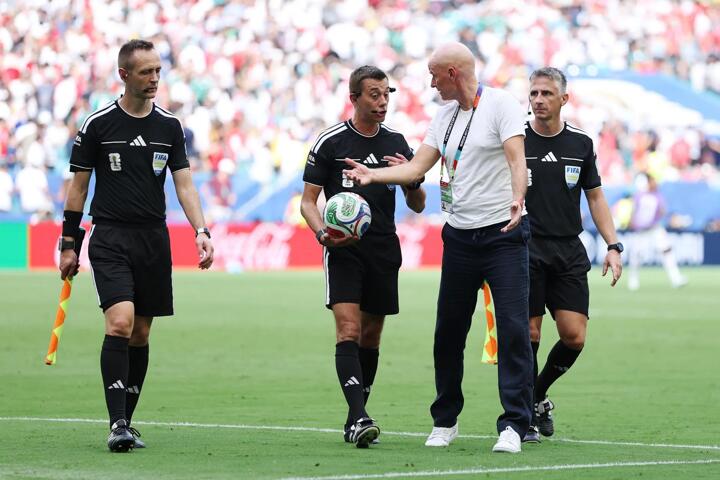
"Perhaps it should be considered. We were a bit unlucky today, but we've also had our lucky moments before. That's part of football." Solbakken's response to the controversial goal was quite dignified.
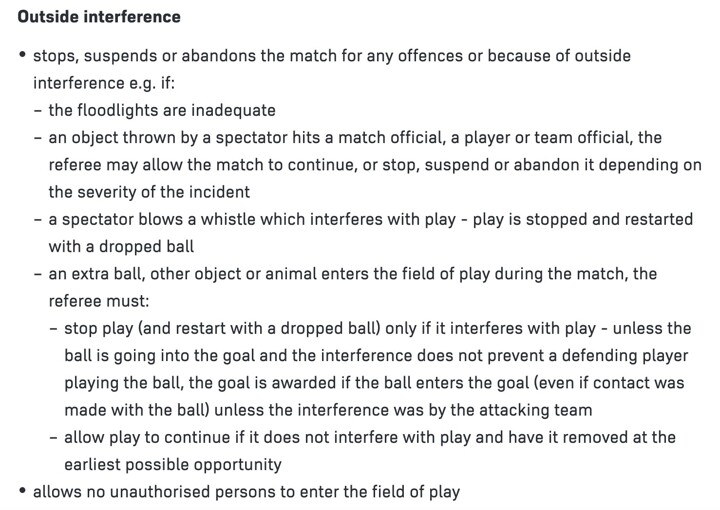
According to the FIFA World Cup regulations, the Laws of the Game by IFAB apply to the matches. IFAB Law 5 stipulates that if an extra ball, object, or animal enters the field and interferes with play, the referee should stop the game and resume it with a dropped ball. IFAB's wording also includes "object" within the scope of outside interference. Therefore, if the football did indeed touch the aerial camera system cable and affected the game, it should be treated as interference from an external factor, and the referee should stop the game and resume it with a dropped ball.
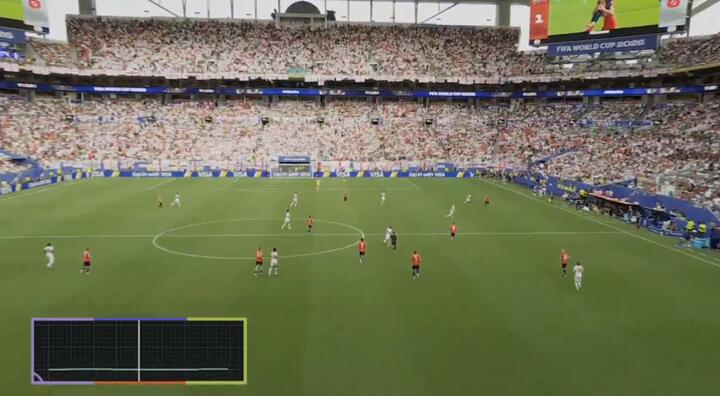
However, Turpin did not make a ruling on this, and FIFA later issued a statement that the chip in the ball did not show any spikes in the air, so there was no evidence that the ball touched the cable and changed its trajectory.
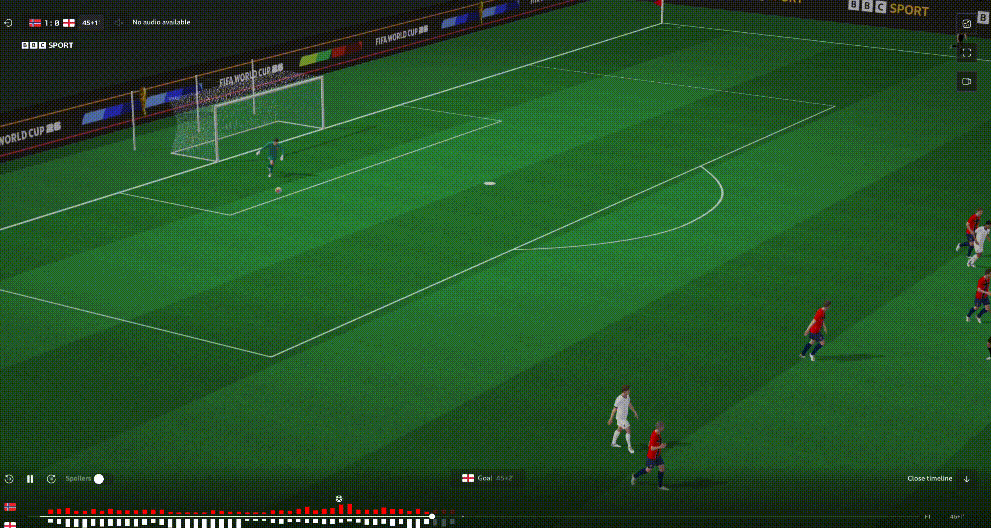
However, the BBC's animated broadcast showed that the ball's trajectory in the air was deflected. In addition, the disallowed equalizer between Croatia and Portugal also caused considerable controversy. Whether Norway was wronged or not, only that small chip and FIFA itself know best.
Previously, in two "balloon incidents" in British football, the referees ignored them.
Manchester City's white balloons
If you ask a Manchester City fan why he doesn't like balloons, he'll tell you to look up what happened on January 27, 2008. At that time, Manchester City, under Sven-Göran Eriksson, traveled to face Championship side Sheffield United for a place in the FA Cup last 16.
Before the match, Manchester City fans released hundreds of blue and white balloons. However, after the game started, dozens of balloons gradually floated towards the goal defended by Hart.
The England international goalkeeper could only guard the goal while stomping on the balloons. When Sheffield United attacked from the left, there were still many in front of him. However, Hart did not complain to referee Alan Wiley or ask for the game to be stopped, and misfortune finally struck.
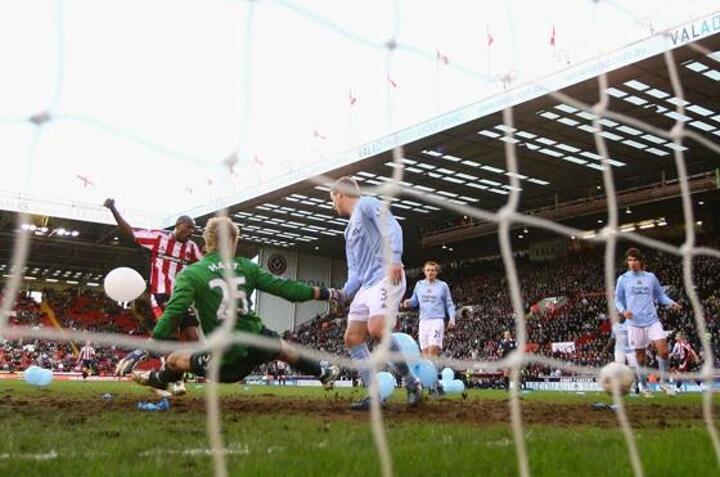
Sheffield United player Lee Martin crossed from the left, sweeping across the penalty area. Manchester City defender Michael Ball frantically cleared the ball, but he kicked a white balloon of the same color as the match ball. Opposing striker John Shelton pounced on it and fired a shot that beat Hart.
Liverpool's red balloon
Liverpool was also harmed by a balloon. In the 9th round of the 09-10 Premier League season, Liverpool played away against Sunderland. Just 5 minutes into the game, Sunderland launched a counterattack. At that moment, a large red balloon suddenly flew in front of Liverpool's goal. It was later proven that this was thrown from the stands by a young Liverpool fan.

Neither the Liverpool defender nor goalkeeper Reina cleared this unexpected obstruction. Meanwhile, Darren Bent received the ball and fired a powerful shot. Reina moved sideways to save, but the ball happened to hit the balloon and was deflected. Unlucky Reina instinctively moved his body and right hand towards the direction the red balloon flew, but the actual ball slipped into the net on his other side.
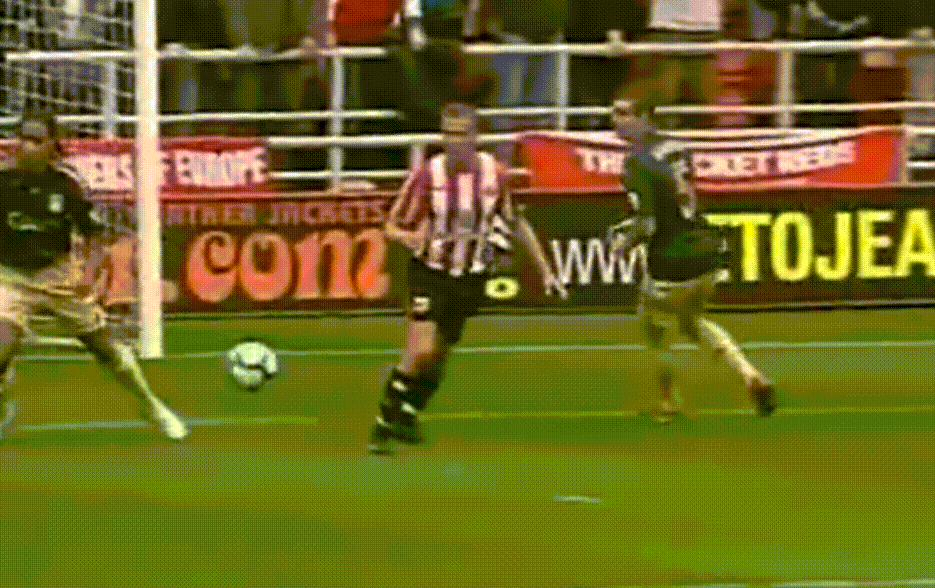
Regarding this goal, other Liverpool players said it should be disallowed, but the referee at the time, Mike Jones, immediately ruled it a valid goal. After the match, Benítez said: "That might have been a goal, it's hard to say. Anyway, in this game, that goal counted." Liverpool also suffered three consecutive defeats.
In the two cases from many years ago, English referees did not treat them as external interference, but instead ruled all goals as valid. Perhaps FIFA should clarify this rule better.
Flying cameras not only have the potential to interfere with games but also raise safety concerns.
A "flying camera," usually referring to an aerial cable camera system in sports broadcasting. This equipment uses multiple high-strength cables to suspend a camera above the stadium. Through motorized winches, gyroscopic stabilizing gimbals, and control software, the camera can move in three dimensions in the air, capturing shots like dives and follow-up movements.
The inventor of the flying camera is Garrett Brown. You might not be familiar with this name, but if you enjoy blockbusters, you should be familiar with the "Steadicam" equipment. That's right, both were invented by this American old man.
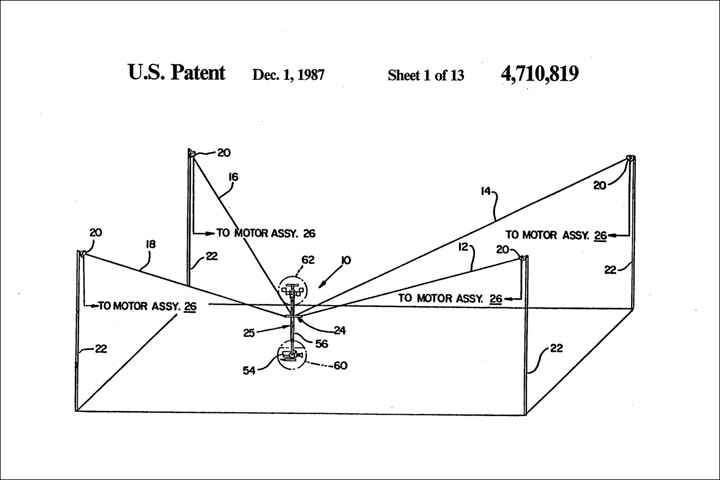
Skycam first appeared in a football match in Major League Soccer in 2005, then made its World Cup debut in South Africa in 2010; the 2017 Red Derby was its first appearance over a Premier League stadium, successfully recording Milner's penalty kick and Ibrahimović's headed equalizer.
Frequent interference with games
Although flying cameras provide richer viewing angles and more exciting visual impact, they have also had a significant impact on various sports.
In the 2016 MLS match between Sporting Kansas City and D.C. United, a Sporting Kansas City defender cleared the ball with a long kick, and the ball directly hit the flying camera in the air. The referee immediately stopped the game and awarded D.C. United a goal kick.
In 2015, Australian cricket captain Steven Smith publicly complained that spidercam cables interfered with his vision, affecting his judgment when catching the ball.
In 2016, during an ODI match between India and Australia, India's cricket captain Virat Kohli's shot hit the spidercam and was ruled a dead ball. With the increasing popularity of flying cameras, athletes have continuously stated that broadcasting equipment should not interfere with the game.
Frequent safety incidents
In 2005, skycam crashed just over three months after its deployment in MLS. Before the end of the first half of the match between Chivas USA and LA Galaxy, skycam suddenly fell near the sideline. It took nearly five minutes for on-site staff to re-hoist the camera to a safe height above the field, but this incident led MLS executives at the time to question the safety of such cameras. What if it fell and hit someone?
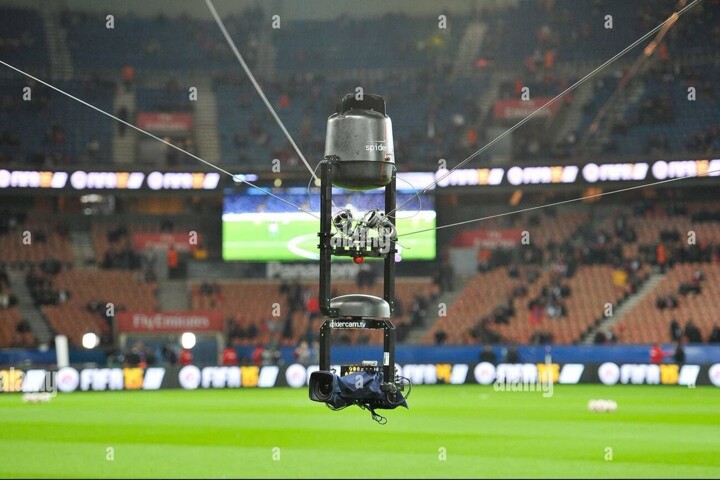
This concern finally became a reality in an American college football game in 2011. During the game, SkyCam suddenly fell onto the field, nearly hitting a player's head, and he was tangled in the cable and suffered minor abrasions. Subsequent investigations showed that the accident was related to a bolt assembly coming loose.
A more serious accident occurred at a racetrack in 2013 during the NASCAR Coca-Cola 600-mile race, when the steel cable of the FOX aerial camera system suddenly fell, injuring more than a dozen spectators. More seriously, multiple race cars were damaged due to hitting the cable or getting their tires tangled in it, forcing the race to be interrupted by a red flag.

Even after more than 10 years of upgrades, the safety of skycam still cannot be 100% guaranteed.
On June 10 this year, Hungary and Kazakhstan played a friendly match. During the game, a skycam caught fire and fell from a height of approximately 20 meters. The falling point was only about two meters from an on-site cameraman. Fortunately, there were no casualties. This device weighs about 30 kilograms and should normally be suspended by two coated steel wires over 60mm in diameter acting as a cableway, but only one was used on site. Then the motor caught fire and burned through the track, causing the skycam to fall.
Modern football is increasingly reliant on advanced broadcasting technology, but the resulting controversial rulings and interference with the game exist in a blurry boundary. The reliability and safety of such equipment are even more pressing issues that need to be addressed.
AF's PC site is now live! Browse full news, comments, match details and stats on your computer. Visit: www.allfootballapp.com