


For anyone old enough to recall Peter Shilton and Ray Clemence duelling for England's No1 jersey and the enduring legacy of Gordon Banks, it came as a sobering list.
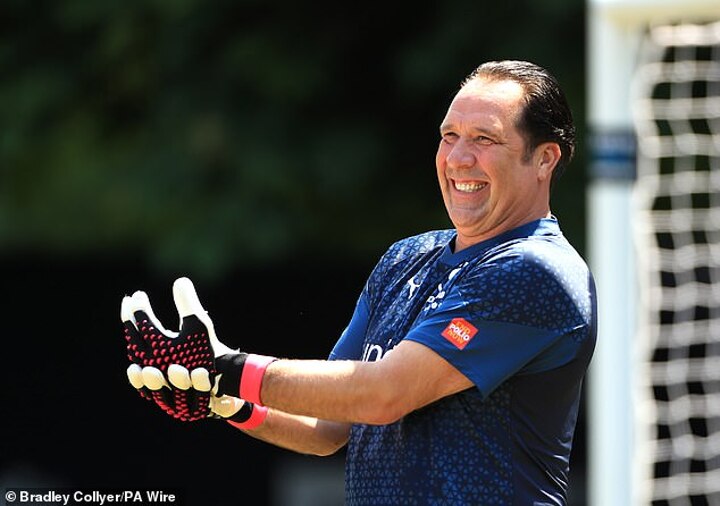
The top 10 goalkeepers of the Premier League era, as selected by Sky Sports guru Jamie Carragher in the presence of Edwin van der Sar, featured only one Englishman.
That honour belonged to David Seaman, who made his final appearance more than 22 years ago.
It triggered the usual barroom debate. Neville Southall, who appeared at No8 on Carragher's list despite being almost 34 and past his brilliant best when the Premier League launched, was quick to disagree.
Southall thought Tim Flowers and Joe Hart were worthy of inclusion, and yet Flowers hung up his gloves before Seaman and the case for Hart is pre-2016 when he was displaced at Manchester City.
Since then, top-flight English goalkeepers have become seriously endangered.
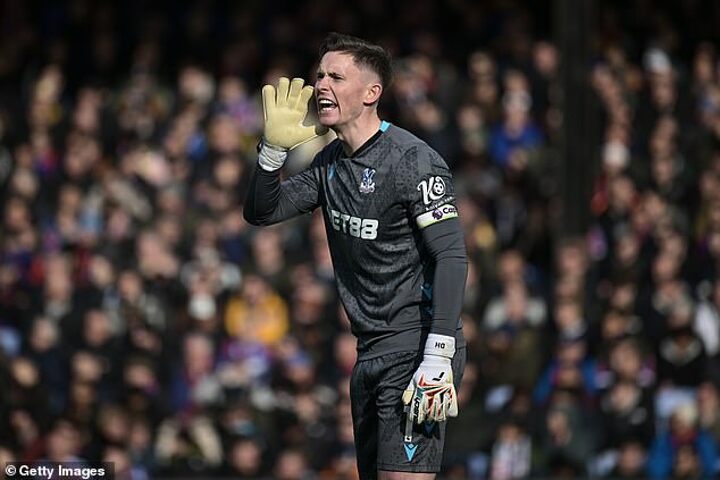
Only three played in the latest Premier League fixtures. Jordan Pickford at Everton, Dean Henderson at Crystal Palace and Nick Pope at Newcastle, all established as first choice at their clubs.
Only six have made appearances all season, a figure down from 13 last season.
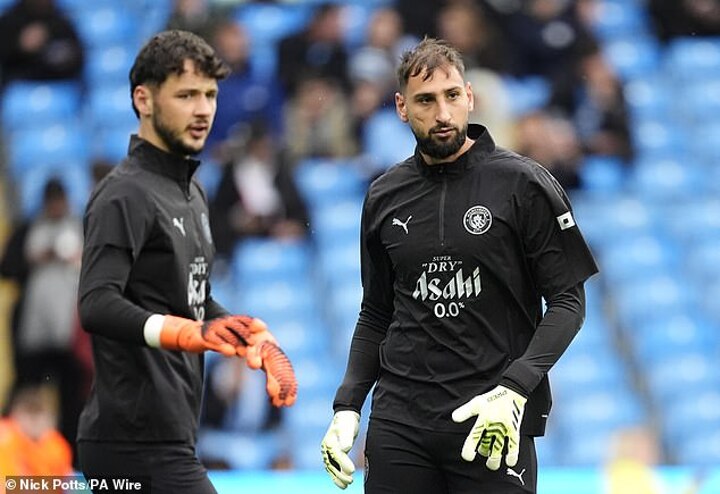
Sam Johnstone, competing with Jose Sa at Wolverhampton Wanderers, James Trafford, who started in City's goal before Gianluigi Donnarumma signed, and Aaron Ramsdale, Pope's deputy at Newcastle, are the others.
Together these six combined have made just 97 appearances, which is on course for a sizeable drop on last season's 181 and could prove a new low, currently set at 134 in 2013/14.
The inaugural Premier League season of 1992/93 featured 28 different English goalkeepers who made 571 appearances between them. It seems like another world.
The internationalisation of the Premier League is, of course, the driving factor.
We are accustomed to it now. Overseas players flock to these shores, all of them identified by an international cast of sporting directors with transfers facilitated by various international agencies and oiled by the billions on offer.
They come to play under an array of managers from overseas, whose backroom teams feature several international goalkeeping coaches, with their associated prejudices about what makes a good keeper, what absolutely does not.
It does not help the England team, but when England hire a German head coach in Thomas Tuchel and a Portuguese goalkeeping coach in Hilario it is impossible to complain about how clubs choose to operate.
When Sunderland won promotion last year, they replaced first choice 'keeper Anthony Patterson, born in nearby North Shields, with Robin Roefs, signed for £9million from NEC in the Netherlands.
The decision proved inspired. Roefs has excelled. His performances rank highly among reasons why the Wearsiders are set to survive their first season back in the Premier League and now the 23-year-old is attracting interest from further up the food chain, including Chelsea.
In January, Sunderland moved into the market again to pledge another £3.5m on another keeper, Melker Ellborg, 22, from Malmo in Sweden. Patterson, 25, left for Millwall on loan.
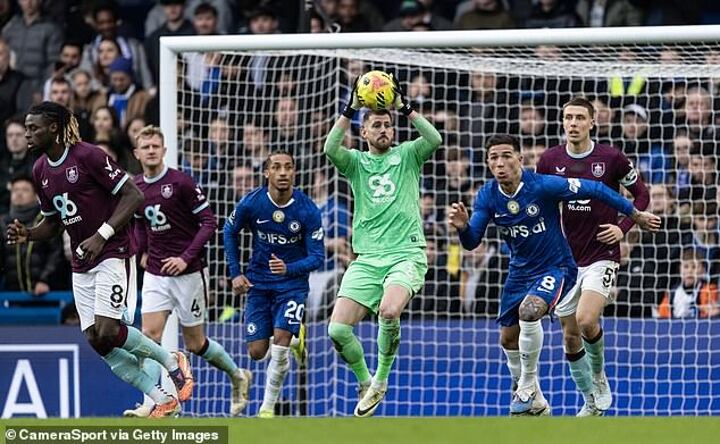
When Burnley sold Trafford after promotion last summer, they signed Martin Dubravka, a veteran Slovak from Newcastle, and Max Weiss, a young German from Karlsruhe.
When Leeds finally gave up on Illan Meslier and sought an upgrade after last year's promotion, they spent £15m on Lucas Perri, a 27-year-old Brazilian from Lyon. Karl Darlow, now preferred to Perri, represents Wales.
Eyes turn to the academies, but academy coaches will claim they produce plenty of promising goalkeepers at 18. The snagging point, as with outfield players, comes with progress beyond that point.
And the problem is more exaggerated for goalkeepers. Only one is going play. None of them are having 10 minutes at full back or outside left.
It is very rare to see them come off the bench for experience as 18-year-old Tommy Setford did for Arsenal in the 87th minute of their FA Cup fourth round tie against Wigan.
So, the Premier League's top-ranked Category One academies, cream the best of the talent from across England, train them in their state-of-the-art facilities, and yet have nowhere for them to go to finesse their craft in the senior game.
Like any talented young athletes, goalkeepers must compete regularly if they are going to develop. They need to make mistakes and learn to cope with the pressure. And if they are going to develop into elite performers, they do really need exposure to elite competition.
Premier League wealth enables their clubs to bypass this risk. They don't need to suffer players learning on the job, especially not those in key positions where mistakes are likely to result in goals conceded.
Many will happily pay a premium for goalkeepers sculpted and polished into finished articles elsewhere.
But they find it is convenient to have an English back-up goalkeeper or two to help manage the home-grown squad list quotas. Some settle into this back-up role late in their careers.
Meanwhile, those graduating from the academies search for opportunities on loan.
One of England's brightest prospects is Oliver Whatmuff, 18, and on loan from Manchester City at Rochdale who are top of the National League.
Brighton acquired a reputation for finding and developing goalkeepers. They have Carl Rushworth, 24, on loan at Coventry, and James Beadle, 21, on loan at Birmingham.
Others are thriving in the Championship.
Sol Brynn, 25, is a graduate of Middlesbrough's academy established in the first team, and Michael Cooper, 26, who emerged from Plymouth's youth system, is now impressing at Sheffield United.
If any of their clubs win promotion, can these goalkeepers avoid the same fate as Patterson? If not, can they strike a Premier League move or do the overseas technical experts who are now in control of so many of the biggest clubs in this country think an education in Europe is a better grounding for goalkeepers than the EFL?
Or is the art of the goalkeeper about to change direction again? Will those who followed Pep Guardiola towards keepers who can play with a ball at their feet follow him back towards big, strong keepers like Donnarumma who command the airspace under attack from set-pieces?
Beyond this, will keepers think twice about trading regular football for what could easily turn out to be a place on the Champions League bench after the experience of Trafford?
Those in a multi-club system might see a solution by placing their developing goalkeepers at sister clubs where they have a little more control over their appearances and style of football.
James Wright, a 21-year-old goalkeeper on the Aston Villa bench on Saturday because Dutch back-up keeper Marco Bizot was banned, spent last season at Real Union, a third-tier Spanish club under the same ownership.
But whereas gradually over time outfield English players have started to filter out across Europe, goalkeepers have not.
It feels like a difficult cycle to break.